There’s something incredibly comforting about the ritual of boiling water. Whether it’s for that first-morning coffee that kick-starts your brain, a calming cup of evening tea, or just a quick bowl of oatmeal, the electric kettle is an unsung hero of the modern kitchen. But when you start shopping for one, you’re immediately faced with a classic dilemma. This is the heart of the Glass Vs Stainless Steel Electric Kettle Comparison: do you go for the sleek, modern transparency of glass or the timeless, rugged durability of stainless steel? It’s a bigger decision than you might think, and I’m here to walk you through it, cup by cup. My old kettle, a trusty stainless steel model, served me well for years, but when it finally gave up the ghost, I found myself deep in this very debate. Let’s unravel it together.
The Allure of Glass: A Theater in Your Kitchen
There’s no denying it—glass electric kettles are beautiful. Watching the water go from still to a rolling boil is genuinely mesmerizing. It’s like a little piece of kitchen theater every time you use it.
The Clear Advantage: Purity and Aesthetics
The primary reason people gravitate towards glass is for its pure, non-reactive nature.
- Pristine Taste: Glass doesn’t impart any metallic or plastic taste to your water. What you put in is what you get out, which is a massive plus for tea and coffee purists who can detect even the slightest change in flavor profile.
- Visual Confirmation: You can see exactly what’s going on inside. You know precisely when the water is boiling, and you can instantly spot any limescale buildup that needs to be cleaned. There’s no guessing about the water level, either.
- Modern Look: Most glass kettles feature clean lines, often accented with stainless steel and cool blue LED lights that illuminate the water as it boils. They look fantastic on almost any countertop, adding a touch of modern elegance.
The Not-So-Clear Downsides
However, living with a glass kettle isn’t without its challenges.
- Durability Concerns: While most are made from tough, thermal-shock-resistant borosilicate glass (the same stuff used in lab beakers), it’s still glass. A clumsy knock against the faucet or a drop on a hard floor can mean game over. It’s not the best choice for households with rambunctious kids or, let’s be honest, butterfingered adults.
- Maintenance is a Must: That beautiful transparency is a double-edged sword. If you live in a hard water area, limescale deposits will be on full display, turning your crystal-clear kettle into a cloudy mess. You’ll need to be diligent about descaling to keep it looking pristine.
- Heat on the Outside: Glass is not a great insulator. The exterior can get very hot to the touch, which requires a bit more caution during use.
The Strength of Steel: A Kitchen Workhorse
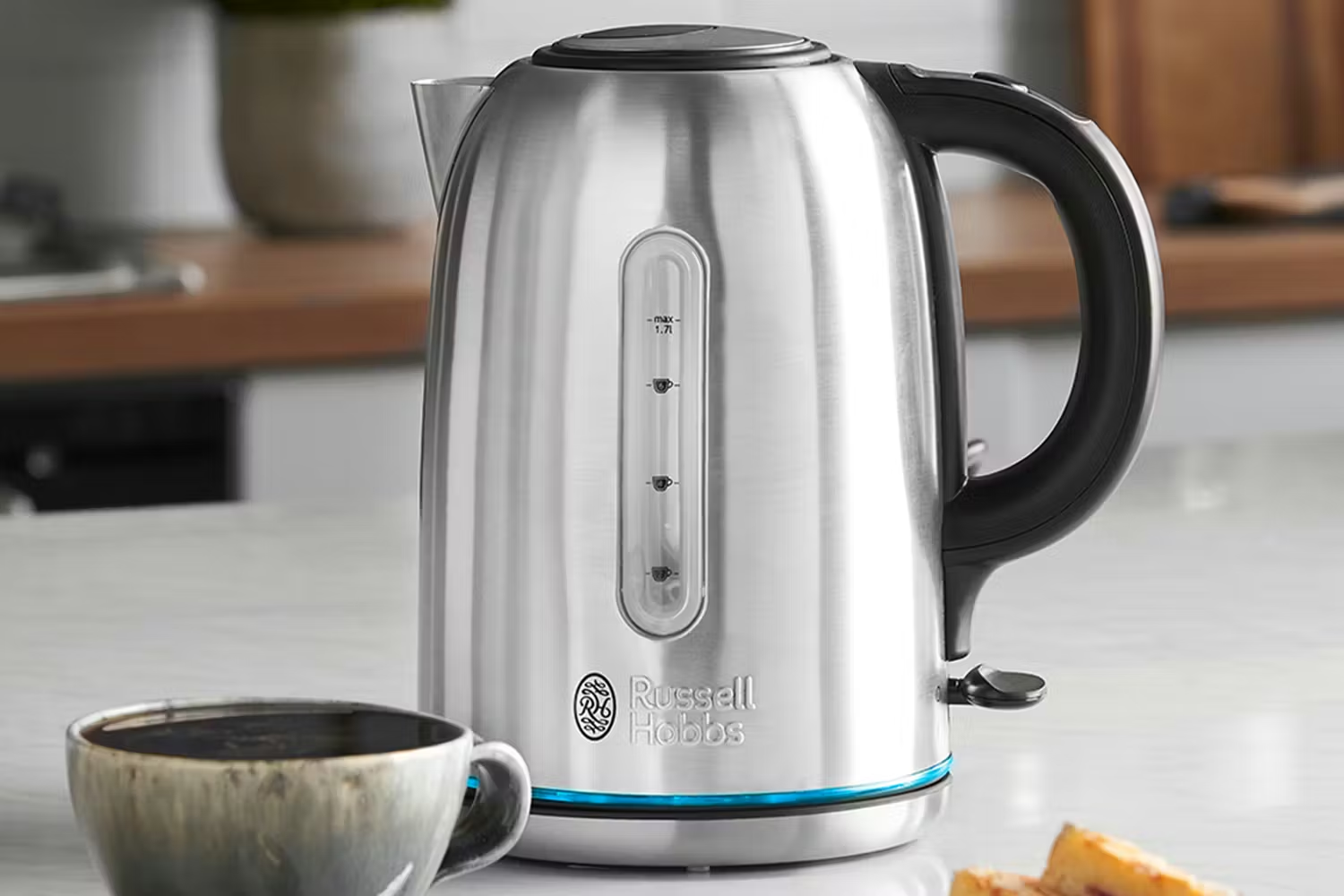
Stainless steel electric kettles are the dependable workhorses of the hot water world. They’re built to last and are packed with features, making them a consistently popular choice.
Built to Last and Packed with Features
When you choose stainless steel, you’re choosing reliability.
- Exceptional Durability: This is steel’s knockout punch. You can knock it, ding it, and it will likely just get a bit of character. A stainless steel kettle is a long-term investment that can withstand the rigors of a busy kitchen.
- Superior Heat Retention: Stainless steel is a much better insulator than glass. This means your water will stay hotter for longer after it has boiled, which is great if you’re a slow-morning person or might want a second cup shortly after the first.
- Feature-Rich Options: The stainless steel category is where you’ll find the most innovation. Models with variable temperature settings, keep-warm functions, and specialized gooseneck kettle spouts for pour-over coffee are almost always made of stainless steel.
As Dr. Amelia Vance, a materials scientist specializing in consumer products, notes, “Food-grade stainless steel, particularly 304 grade, offers an excellent balance of durability, heat resistance, and corrosion resistance, making it an ideal material for appliances that repeatedly handle high temperatures.”
The Potential Drawbacks
Of course, the trusty steel kettle has its own set of cons.
- Hidden Water Levels: The biggest annoyance for many is the opaque body. While most have a small plastic window to show the water level, they can be hard to read, leading to over or under-filling.
- Potential for a Metallic Taste: Although high-quality, food-grade stainless steel shouldn’t affect the taste, some users with very sensitive palates report a slight metallic tang, especially when the kettle is new.
- Hot Exterior: Just like glass, the exterior of a single-walled stainless steel kettle can get extremely hot. However, you can find double-walled, vacuum-insulated models that stay cool to the touch.
Head-to-Head: A Direct Glass vs Stainless Steel Electric Kettle Comparison
To make things easier, let’s put them side-by-side in a direct comparison.
| Feature | Glass Electric Kettle | Stainless Steel Electric Kettle |
|---|---|---|
| Aesthetics | Modern, visually engaging, LED lighting is common. | Classic, industrial, or modern designs. Can be fingerprint-prone. |
| Durability | Lower. Vulnerable to cracks and shattering from impact. | Very high. Resistant to dents, drops, and scratches. |
| Taste Purity | Excellent. Completely inert, no risk of flavor transfer. | Very good, but a rare few may notice a slight metallic taste. |
| Cleaning & Maintenance | Easy to see when it needs cleaning, but shows scale easily. | Hides limescale well, but can be harder to see inside. |
| Heat Retention | Poor. Water cools relatively quickly. | Good to excellent, especially in double-walled models. |
| Features | Generally more basic features. | Often includes advanced features like variable temp control. |
| Price | Tends to be slightly more affordable for basic models. | A wider range of prices, with high-end models being pricier. |
Which Kettle is Right for You? Key Questions to Ask
The best choice ultimately comes down to your personal priorities and lifestyle. Here’s a quick checklist to guide your decision in the glass vs stainless steel electric kettle comparison.
- Is taste your absolute top priority? If you are a tea aficionado or coffee connoisseur, the unparalleled purity of a glass kettle might be the deciding factor.
- Do you have a busy, chaotic kitchen? If durability is paramount, the ruggedness of a stainless steel kettle is your safest bet. It’s built to withstand the occasional bump and scrape.
- Are you a tech and features enthusiast? If you want precise variable temperature control for different types of tea or a keep-warm function, you’ll find the best options in the stainless steel category.
- How important is visual appeal? If you love a clean, modern look and enjoy watching the boiling process, a glass kettle will be a beautiful addition to your countertop.
- How much maintenance are you willing to do? Be honest with yourself. If you know you won’t descale your kettle regularly, a stainless steel model will be more forgiving in hiding the evidence of hard water.
|
Our Picks for the Best Electric Kettle in 2026
As an Amazon Associate, we earn from qualifying purchases.
|
||
| Num | Product | Action |
|---|---|---|
| 1 | OVENTE Electric Kettle, 1.5L Borosilicate Glass Countertop Water Heater and Boiler for Coffee or Tea, BPA-Free, Auto Shut-Off, Boil-Dry Protection, Removable and Washable Spout Filter, Black KG83B |

|
| 2 | OVENTE Electric Kettle, 1.5L Borosilicate Glass Countertop Water Heater and Boiler for Coffee or Tea, BPA-Free, Auto Shut-Off, Boil-Dry Protection, Removable and Washable Spout Filter, Black KG83B |
|
| 3 | Chefman Electric Kettle, 1.8L 1500W, Hot Water Boiler, Removable Lid for Easy Cleaning, Auto Shut Off, Boil-Dry Protection, Stainless Steel Filter, BPA Free, Borosilicate Glass Electric Tea Kettle |
|
| 4 | Amazon Basics Electric Stainless Steel Kettle for Tea and Coffee, BPA-Free, Fast Boiling, Auto Shut-Off, 1.1 Quarts, 1500W, Black and Silver |
|
| 5 | Chefman Electric Kettle, 1.8L 1500W, Hot Water Boiler, Removable Lid for Easy Cleaning, Auto Shut Off, Boil-Dry Protection, Stainless Steel Filter, BPA Free, Borosilicate Glass Electric Tea Kettle |
|
| 6 | Cuisinart 1.7-Liter Stainless Steel Cordless Electric Kettle with 6 Preset Temperatures |
|
| 7 | Cosori Electric Kettle, No Plastic Filter & Spout, 1.7L Tea Kettle & Hot Water Boiler For Coffee & Tea, Water Heater & Teapot, Automatic Shut Off, Borosilicate glass, Black, 1500W |
|
| 8 | Chefman Electric Kettle with Tea Infuser, 1L 1500W, Removable Lid for Easy Cleaning, Boil-Dry Protection, Stainless Steel Filter, BPA Free, Auto Shut Off Hot Water Boiler, Small Electric Tea Kettle |
|
| 9 | Amazon Basics Electric Kettle with Glass Carafe for Tea and Coffee, BPA-Free, Fast Boiling, Auto Shut-Off, 1.8 Quarts, 1500W, Black and Silver |
|
| 10 | Chefman Electric Kettle with Temperature Control, 5 Presets LED Indicator Lights, Removable Tea Infuser, Glass Tea Kettle & Hot Water Boiler, 360° Swivel Base, BPA Free, Stainless Steel, 1.8 Liters |
|
A Quick Guide to Kettle Care
No matter which material you choose, a little TLC will extend its life and keep your water tasting fresh.
- Never boil the kettle dry. This can damage the heating element. Thankfully, most modern kettles have boil-dry protection.
- Descale regularly. This is especially important for glass kettles. A simple solution of equal parts white vinegar and water is all you need. Fill the kettle halfway, boil it, then let it sit for an hour.
- Rinse thoroughly. After descaling, rinse the kettle several times with fresh water to remove any lingering vinegar taste.
- Wipe the exterior. Use a soft, damp cloth to wipe down the outside. For stainless steel, a microfiber cloth can help buff away fingerprints.
Frequently Asked Questions
Which is safer, a glass or stainless steel kettle?
Both are very safe when used correctly. The primary safety difference is durability; glass can shatter if dropped. From a material standpoint, both food-grade 304 stainless steel and borosilicate glass are non-toxic and safe for boiling water. Look for models with auto shut-off and boil-dry protection.
Do glass electric kettles break easily?
While they are more fragile than stainless steel, they aren’t as delicate as you might think. Most are made from borosilicate glass, which is strengthened to handle rapid temperature changes. However, a sharp impact or a drop can certainly cause a crack or shatter it completely.
Does a stainless steel kettle make water taste funny?
High-quality, food-grade stainless steel should not alter the taste of your water. If you notice a metallic taste, it often happens with a brand new kettle and usually fades after a few uses and a good cleaning with a vinegar solution.
How often should I descale my water boiler?
This depends heavily on the hardness of your water. For very hard water, you might need to descale every month. For soft water, every three to four months might be sufficient. A good rule of thumb for a glass kettle is to clean it as soon as you see visible mineral deposits forming.
Are the plastic parts in kettles safe?
This is a valid concern. Reputable manufacturers use BPA-free plastic for any parts that come into contact with water, such as the internal water level indicator or parts of the lid. Always check the product description to ensure it is advertised as “BPA-free.”
The Final Verdict
So, where do we land in the great glass vs stainless steel electric kettle comparison? There’s no single “winner.” The perfect kettle is the one that fits seamlessly into your life. If you’re a purist who values aesthetics and doesn’t mind a bit of extra care, the clean taste and visual appeal of a glass kettle are hard to beat. If you’re a practical-minded person who needs durability, advanced features, and excellent heat retention for your busy life, a stainless steel kettle will be your faithful companion for years to come. Consider your habits, your kitchen, and what you value most in your daily routine. Now go forth and choose your champion with confidence.