So, you’ve fallen down the rabbit hole of pour-over coffee. Welcome! It’s a beautiful world of precision, aroma, and that perfect, clean cup. But you’ve probably realized that your standard, wide-spout kettle just isn’t cutting it. If you’re ready to seriously upgrade your brew and are looking to buy a kettle for pour over coffee, you’ve come to the right place. This isn’t just about boiling water; it’s about taking control and turning your morning routine into a craft.
Forget those clumsy, splashing pours that drown your coffee grounds. We’re diving deep into the world of gooseneck kettles, variable temperatures, and everything else you need to know to find your perfect partner in coffee crime. Let’s get that water flowing.
Why Do You Need a Special Kettle for Pour Over?
You might be wondering, “It’s just hot water, right? Why the fuss?” This is a fair question, and the answer lies in one word: control. Pour-over brewing is a delicate dance of saturating coffee grounds evenly to extract the best flavors. A standard kettle is like trying to paint a masterpiece with a fire hose—it’s messy and imprecise.
A specialized pour-over kettle gives you complete command over two crucial variables:
- Flow Rate: You can pour as slowly and gently as you need, ensuring you don’t disturb the coffee bed.
- Placement: You can direct the stream of water with pinpoint accuracy, covering all the grounds evenly for a balanced extraction.
Think of it this way: your old kettle gets the water hot, but a pour-over kettle helps you make great coffee.
The Gooseneck Spout: Your Non-Negotiable Secret Weapon
When you start your search, you’ll see one design feature pop up again and again: a long, thin, curved spout. This is the “gooseneck,” and for pour-over, it’s everything.
The gooseneck spout dramatically slows down the flow of water and turns it into a predictable, manageable stream. This allows for the slow, circular pouring motion that is the hallmark of the pour-over method. It gives you the surgical precision needed to wet the grounds evenly, control the “bloom” (the initial release of C02), and avoid channeling, where water finds a quick path through the grounds, leading to under-extraction. Without a gooseneck, achieving a consistent, delicious cup is mostly a matter of luck.
Key Features When You Buy a Kettle for Pour Over Coffee
Beyond the essential gooseneck spout, several features separate a good kettle from a great one. Let’s break down what you should be looking for.
Variable Temperature Control: The Game Changer
Different coffee beans, roast levels, and even grind sizes extract best at different temperatures. Boiling water (212°F or 100°C) is often too hot and can scorch the grounds, resulting in a bitter, unpleasant taste.
A variable temperature kettle is your key to unlocking a coffee’s full potential. It allows you to set the exact temperature you want, typically between 140°F and 212°F (60°C – 100°C).
- Lighter Roasts: Often benefit from higher temperatures, around 200-208°F (93-98°C).
- Darker Roasts: Are more soluble and can be brewed at slightly lower temperatures, around 185-195°F (85-90°C), to avoid bitterness.
Having this control means you can experiment and dial in the perfect recipe for every bag of beans you buy. Many electric models also include a “hold temperature” feature, which keeps the water at your desired temp for up to an hour—perfect for that second cup.
Material Matters: Stainless Steel, Glass, or Plastic?
The body of your kettle impacts everything from durability to taste. Here’s a quick comparison:
| Material | Pros | Cons | Best For |
|---|---|---|---|
| Stainless Steel | Durable, excellent heat retention, easy to clean, doesn’t impart flavors. | Can get hot to the touch, can be heavier. | The serious home barista looking for longevity and performance. |
| Glass | Aesthetically pleasing, allows you to see water level and boiling, no flavor transfer. | More fragile, may have plastic or silicone components that touch water. | The design-conscious user who enjoys the visual aspect of boiling. |
| Plastic | Lightweight, inexpensive, cool to the touch. | Can potentially impart a plastic taste, less durable, concerns about BPA. | Budget-conscious beginners, but always ensure it’s BPA-free. |
“When selecting a kettle, food-grade stainless steel, particularly 304 grade, is the gold standard for a reason,” notes Dr. Alistair Finch, a materials scientist specializing in kitchenware. “It’s incredibly resistant to rust and corrosion and is completely inert, meaning it won’t leach any unwanted flavors or chemicals into your water, ensuring a pure taste every time.”
Ergonomics and Balance: How Does It Feel?
This is an often-overlooked but crucial aspect. You’ll be holding this kettle, filled with near-boiling water, at an angle for several minutes. A poorly balanced kettle with an uncomfortable handle can lead to a shaky, imprecise pour and wrist fatigue.
Look for a kettle with a counterbalanced handle. This design shifts the center of gravity closer to your hand, making the kettle feel lighter and easier to control, even when full. Before you buy a kettle for pour over coffee, try to imagine holding it and performing that slow, circular pour. Comfort is key to consistency.
|
Our Picks for the Best Electric Kettle in 2026
As an Amazon Associate, we earn from qualifying purchases.
|
||
| Num | Product | Action |
|---|---|---|
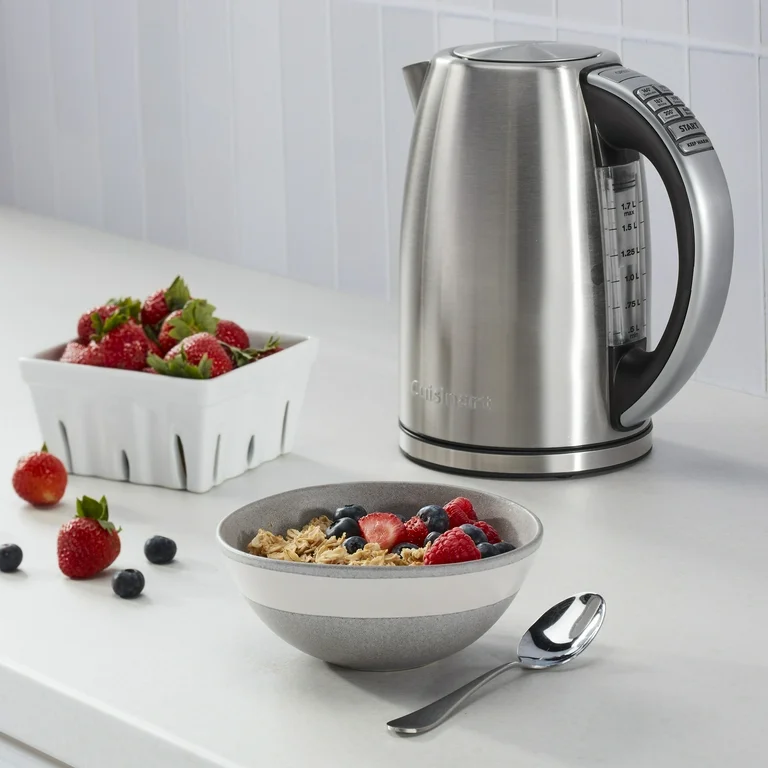
| 1 | Cuisinart 1.7-Liter Stainless Steel Cordless Electric Kettle with 6 Preset Temperatures |

|
| 2 | Amazon Basics Electric Kettle with Glass Carafe for Tea and Coffee, BPA-Free, Fast Boiling, Auto Shut-Off, 1.8 Quarts, 1500W, Black and Silver |
|
| 3 | Chefman Electric Kettle with Temperature Control, 5 Presets LED Indicator Lights, Removable Tea Infuser, Glass Tea Kettle & Hot Water Boiler, 360° Swivel Base, BPA Free, Stainless Steel, 1.8 Liters |
|
| 4 | Chefman Electric Kettle with Tea Infuser, 1L 1500W, Removable Lid for Easy Cleaning, Boil-Dry Protection, Stainless Steel Filter, BPA Free, Auto Shut Off Hot Water Boiler, Small Electric Tea Kettle |
|
| 5 | Cosori Electric Kettle, No Plastic Filter & Spout, 1.7L Tea Kettle & Hot Water Boiler For Coffee & Tea, Water Heater & Teapot, Automatic Shut Off, Borosilicate glass, Black, 1500W |
|
| 6 | Chefman Electric Kettle, 1.8L 1500W, Hot Water Boiler, Removable Lid for Easy Cleaning, Auto Shut Off, Boil-Dry Protection, Stainless Steel Filter, BPA Free, Borosilicate Glass Electric Tea Kettle |
|
| 7 | OVENTE Electric Kettle, 1.5L Borosilicate Glass Countertop Water Heater and Boiler for Coffee or Tea, BPA-Free, Auto Shut-Off, Boil-Dry Protection, Removable and Washable Spout Filter, Black KG83B |
|
| 8 | Amazon Basics Electric Stainless Steel Kettle for Tea and Coffee, BPA-Free, Fast Boiling, Auto Shut-Off, 1.1 Quarts, 1500W, Black and Silver |
|
| 9 | Chefman Electric Kettle, 1.8L 1500W, Hot Water Boiler, Removable Lid for Easy Cleaning, Auto Shut Off, Boil-Dry Protection, Stainless Steel Filter, BPA Free, Borosilicate Glass Electric Tea Kettle |
|
| 10 | OVENTE Electric Kettle, 1.5L Borosilicate Glass Countertop Water Heater and Boiler for Coffee or Tea, BPA-Free, Auto Shut-Off, Boil-Dry Protection, Removable and Washable Spout Filter, Black KG83B |
|
How to Care For Your Gooseneck Kettle
To keep your kettle in top shape and ensure your coffee always tastes fresh, regular maintenance is essential. Limescale and mineral buildup from hard water can affect both performance and taste.
Here’s a simple descaling process:
- Create the Solution: Fill the kettle halfway with a 1:1 solution of white vinegar and water.
- Boil (or Heat): Bring the solution to a boil and then let it sit for at least 30 minutes to an hour. For tough scale, you can let it sit longer.
- Empty and Scrub: Pour out the solution. Use a soft-bristled brush or sponge to gently scrub away any remaining scale.
- Rinse Thoroughly: Rinse the kettle with fresh water 3-4 times to completely remove any vinegar residue.
- Final Boil: Boil a full kettle of fresh water and discard it. This ensures any lingering vinegar taste is gone.
Do this every 1-3 months, depending on the hardness of your water, to keep your kettle working perfectly. For more tips, check out our [internal link to a detailed kettle cleaning guide].
Electric vs. Stovetop: Which is Right for You?
The final big decision is whether to go electric or stick with a traditional stovetop model.
- Electric Kettles: The ultimate in convenience and precision. They heat water faster than a stove, offer precise temperature control, and often have helpful features like a keep-warm function and an automatic shut-off for safety. They are the top choice for most pour-over enthusiasts.
- Stovetop Kettles: A classic and often more affordable option. They are simple, durable, and work on any heat source, including induction or a campfire. However, they lack temperature control (you’ll need a separate thermometer) and take longer to heat.
For someone serious about pour-over, the investment in an electric model with variable temperature control pays for itself in the quality and consistency of your coffee.
Frequently Asked Questions (FAQ)
What is the best temperature for pour over coffee?
The ideal temperature range for pour-over coffee is generally between 195°F and 205°F (90°C to 96°C). However, this can vary based on the coffee’s origin and roast level, which is why a variable temperature kettle is so valuable for experimentation.
Do I really need a gooseneck kettle for pour over?
While you can technically make pour-over with a regular kettle, you will sacrifice significant control over the pour. To achieve the even saturation and balanced extraction that defines great pour-over coffee, a gooseneck kettle is considered essential by virtually all baristas.
How often should I descale my kettle?
You should descale your kettle every 1 to 3 months. If you live in an area with very hard water, you may notice scale buildup more quickly and should aim to clean it monthly. Regular descaling prolongs the life of your kettle and improves the taste of your water.
Is a more expensive kettle always better?
Not necessarily. Price is often tied to brand name, materials, and advanced features like specific temperature presets or Bluetooth connectivity. A mid-range kettle with a solid build, a good gooseneck spout, and reliable variable temperature control will serve you just as well as a high-end model for making excellent coffee.
Can I use a pour-over kettle for making tea?
Absolutely! A variable temperature gooseneck kettle is fantastic for tea. Different types of tea, like green, white, or oolong, require specific water temperatures below boiling to prevent bitterness. The precise temperature control makes it a perfect all-around tea kettle as well.
Your Perfect Cup Awaits
Choosing to buy a kettle for pour over coffee is more than just a simple appliance purchase; it’s an investment in your daily ritual and your enjoyment of specialty coffee. By focusing on the non-negotiable gooseneck spout and prioritizing features like variable temperature control and ergonomic design, you’re setting yourself up for success. You’re giving yourself the tool you need to transform good beans into a truly exceptional cup. Now go on, your perfect brew is waiting.